

TL;DR: Thyroid ablation and surgery both have a place in thyroid nodule treatment, but they serve different clinical needs. For benign symptomatic nodules, radiofrequency ablation offers a minimally invasive alternative that can preserve thyroid function, shorten recovery, and reduce complication burden compared with thyroid nodule removal surgery.
- Thyroid RFA treats the nodule with ultrasound-guided radiofrequency energy while preserving healthy thyroid tissue.
- Key benefits include minimal thyroid ablation side effects, no surgical scar, low complication rates, and a faster return to normal activity.
- Surgery remains the gold standard for confirmed or suspected malignancy, larger nodules, and cases that need definitive pathology.
- Patient selection is central, with RFA often fitting benign symptomatic nodules and surgery remaining important for malignant or technically unsuitable cases.
- The best treatment choice is individualized, balancing pathology, anatomy, recovery expectations, and patient goals.
The Thyroid ablation vs surgery question is a fairly new one, and we have advanced medical technology to thank.
Until 2002, thyroid nodule removal surgery was one of the only viable treatment options for patients with non-malignant thyroid nodules. While effective, this invasive option required significant recovery time and did not necessarily eliminate the need for lifetime medications.
Over the past 20 years, STARMED has been developing new technologies in the field of soft tissue ablation. They were the first to create an electrode specific to the treatment of the thyroid and bring it to America. Essentially, this technology allows clinicians to remove thyroid nodules without surgery. The procedure received FDA clearance in 2018, and thyroid ablation side effects are minimal.
Since then, STARMED has continued to innovate, working with top physicians to improve their RFA technology. Today, radiofrequency ablation has become a valid, minimally invasive alternative to surgery for many thyroid patients.
In this blog, we’ll discuss thyroid RFA as an alternative to traditional thyroid nodule surgery. Continue reading to learn the benefits of this novel procedure and how to incorporate radiofrequency ablation for thyroid nodules into your practice.
What Is Thyroid Ablation (RFA)?
Thyroid ablation is a form of radiofrequency ablation (RFA) that targets thyroid nodules. It’s a minimally invasive, ultrasound-guided procedure. The physician will insert a needle electrode into the nodule, destroying the cells using controlled radiofrequency energy.
The ablated nodule cells are naturally excreted as waste over several months. As a result, the nodule decreases in size, allowing the patient to live comfortably without the loss of healthy thyroid tissue.
The Benefits of RFA for Thyroid Nodules
According to head and neck surgeon Dr. Catherine Sinclair, “Three main benefits [of RFA] would be avoidance of long-term hormone supplementation, neck scar, and long-term calcium problems.”
Because the RFA procedure only targets affected tissue, the thyroid can continue functioning normally. Most patients do not require lifetime medications to maintain their thyroid function after thyroid RFA, and there is typically no scarring. Patients often see a reduction in nodule size within 2 to 3 weeks.
Furthermore, thyroid ablation side effects are minimal. Because clinicians perform the procedure under local anesthesia, it is less dangerous than surgeries requiring general anesthesia. A large, multi-center study has found a total complication rate of 3.3% and a major complication rate of 1.4%. Compare that to statistics from the American Thyroid Association, which show a 9% total complication rate for surgery.
While some patients require a few hours of recovery time, many feel ready to return to work or school immediately. According to endocrine surgeon Dr. Emad Kandil, the majority of patients can return to normal activities 30 minutes after their procedure. Many patients return to work the same day.
In comparison, after surgery on the thyroid nodule, Dr. Kandil requires his patients to take a minimum of two weeks off. They may need to live with restrictions for six or more months following thyroid nodule surgery.
Dr. Kandil also emphasizes that most patients do not report any pain following RFA treatments and that there is some transient pain present in about 12% of all cases. “In my experience,” Dr. Kandil said, “I believe only 4% of my patients had this pain.”
Thyroid Ablation vs Surgery

All surgery comes with risks. Whenever possible, surgeons should seek out effective, clinically proven treatments to avoid invasive surgical intervention. While not all patients will be candidates for RFA, it is a safer, less time-consuming alternative that can result in an enhanced quality of life for many.
RFA for thyroid nodules has only had FDA clearance for about five years, making it a new, cutting-edge technology. Thus, many clinicians might be reluctant to adopt this new procedure when they’ve been performing thyroid nodule removal surgery for decades.
When given the option between a minimally invasive outpatient procedure and surgery, however, many patients are eager to try the least invasive alternative. Clinicians can attract many new patients by investing in RFA technology.
When comparing thyroid RFA and surgery, it can also help to think of patients who may be poor candidates for surgery. Dr. Kandil recalls an 80-year-old patient who had experienced lifelong hyperthyroidism. Due to his age, the patient’s surgical risk was higher than average, making the prospect of thyroid surgery risky and ill-advised.
After the RFA procedure, Dr. Kandil observed the patient was “completely cured” of his hyperthyroidism. The patient’s nodule presented with an 80% reduction in size.
At the time of writing, there are over 300 clinical articles validating the efficacy of the STARMED RFA procedure. Thyroid ablation has the potential to replace a significant number of thyroid surgeries each year. Physicians who implement this technology will be on the cutting edge of medical innovation, improving the lives of their patients.
Thyroid Surgery: The Gold Standard with a New Challenger
Despite the rise of minimally invasive techniques, thyroid surgery remains the gold standard for treating malignant thyroid conditions, larger nodules, and cases where RFA may not be indicated.
Surgical Considerations include the following:
- Definitive Treatment: Surgery, whether lobectomy or total thyroidectomy, offers a permanent solution, especially crucial in malignancies.
- Comprehensive Diagnostics: Postoperative histological examination provides a definitive diagnosis and staging, guiding further management.
- Adaptability: Thyroid nodule removal surgery can address a broader range of pathologies, including larger nodules and those with suspicious features.
Making the Choice: RFA vs. Surgery
In some cases, it’s wise to give patients the choice regarding their preferred thyroid treatment. In others, the features of a patient’s nodules may require surgery over RFA . Consult the patient selection criteria below to better understand patient candidacy.
Ideal Thyroid Ablatoon Candidates:
- Have benign, symptomatic nodules
- Desire a non-surgical option
- May have comorbidities that increase surgical risk
Ideal Surgical Candidates:
- Have either confirmed or suspected malignancies
- Have nodules unsuitable for RFA
- Have a preference for a one-time definitive treatment
Embracing Patient-Centered Thyroid Care
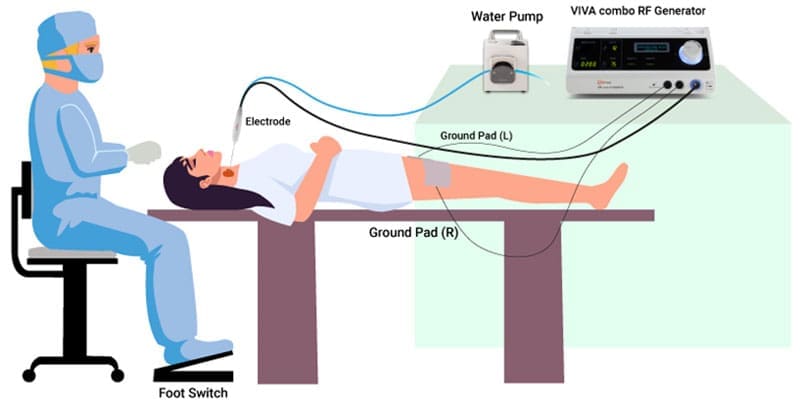
As the therapeutic landscape for thyroid conditions expands, it is incumbent upon physicians to stay informed about the latest advancements in treatment technology. Likewise, the best practice is to always holistically consider our patients’ needs.
By understanding the distinct profiles of thyroid ablation and surgery, we can navigate our patients through the complexities of decision-making. Everyone benefits when physicians offer options that align with their health goals, lifestyles, and values.
Ultimately, the choice between RFA and surgery is not just a clinical decision. It’s a partnership between physician and patient, tailored to achieve the best possible outcome for each individual.
Embracing these advancements in thyroid care allows physicians to offer a spectrum of choices to patients, ensuring that their treatment not only addresses the physical aspects of thyroid disease but also harmonizes with their overall well-being and quality of life.
Frequently Asked Questions
How can thyroid nodules be treated without surgery?
Benign thyroid nodules can often be treated without thyroid nodule removal surgery by using ultrasound-guided thyroid ablation. Radiofrequency ablation targets the nodule while preserving the surrounding thyroid tissue, which can help reduce symptoms without removing part or all of the gland.
For appropriate patients, this approach offers a minimally invasive alternative to thyroid nodule surgery. It is especially relevant for patients who want to avoid a scar, shorten recovery time, or reduce the chance of needing long-term hormone therapy.
Which patients are poor candidates for thyroid ablation?
Thyroid ablation is not the best fit for every patient. Surgery remains the preferred option for confirmed or suspected malignancy, larger nodules in some settings, and nodules that are unsuitable for ablation based on their features or location.
In practice, thyroid ablation vs surgery should be decided by matching the treatment to the nodule and the patient, not by treating one option as universal. Patients who want a one-time definitive treatment may also still prefer thyroid nodule surgery.
What are the most common thyroid ablation side effects?
Thyroid ablation side effects are usually limited and often temporary, but clinicians should still counsel patients carefully. Compared with thyroid nodule removal surgery, thyroid ablation is generally associated with fewer major complications, less downtime, and no surgical scar. That makes side effect counseling less about broad surgical risk and more about setting expectations for recovery, symptom improvement, and follow-up shrinkage of the nodule.
Does thyroid ablation preserve thyroid function better than surgery?
For many benign nodules, yes. Because thyroid ablation targets the nodule rather than removing healthy thyroid tissue, many patients do not require lifelong hormone supplementation after treatment.
Surgery can still be the right choice in many cases, but preservation of normal thyroid tissue is a major reason clinicians and patients consider ablation first when the nodule is benign and suitable for treatment.
How quickly can patients recover after thyroid ablation?
Recovery after thyroid ablation is typically much faster than after thyroid nodule surgery. Many patients feel ready to return to normal activities quickly, and some return to work the same day.
That shorter recovery window can matter in treatment selection, especially for patients trying to avoid the longer downtime and activity restrictions that often follow thyroid nodule removal surgery. For clinicians, this is often one of the most practical differences to discuss during consultation.
When is thyroid nodule surgery still the better option?
Thyroid nodule surgery is still the better option when malignancy is confirmed or suspected, when definitive pathology is needed, or when the nodule is not a good technical fit for ablation. Surgery also remains the gold standard for many malignant thyroid conditions and for cases that require a broader operative approach.
Some patients also prefer surgery because they want one definitive treatment rather than interval imaging and follow-up reduction over time. In those cases, the choice is shaped by pathology, anatomy, and patient preference rather than by technology alone.
Is thyroid ablation safer for high-risk surgical patients?
It can be an especially valuable option for selected patients whose comorbidities increase surgical risk. That does not make thyroid ablation automatically appropriate for every high-risk patient. It does mean clinicians should consider whether a minimally invasive outpatient approach can achieve the treatment goal while reducing the burden of surgery.
How should clinicians explain thyroid ablation vs surgery to patients?
The clearest explanation is that thyroid ablation treats the nodule while preserving the thyroid, whereas thyroid nodule surgery removes tissue and may be more appropriate when cancer risk, pathology needs, or anatomy make surgery the stronger choice.
For many benign symptomatic nodules, the counseling discussion comes down to recovery time, scar avoidance, thyroid function preservation, and candidacy. Patients usually benefit most when clinicians present thyroid ablation vs surgery as a tailored decision based on clinical findings and patient goals.
Innovate with STARMED
Physicians who implement thyroid RFA technology can be leaders in medical innovation. STARMED would like to be your trusted companion on the journey toward implementation. You’ll be working with the creators of the first RF solution for thyroid nodule management.
Our team has the longest history in research and development, and we’re eager to work with trailblazing clinicians to continue to innovate and improve our products. You’ll benefit from professional development and real-time clinical support through STAR support and STAR Academy. No other RFA partner is offering such a comprehensive suite of services to support clinicians new to this technology.
The path toward innovation begins with a conversation. Contact us today to begin the process.
